

 Aktuelno
Oktobar
19, 2021.
e-Government support centers established through the ICEDA Small Grant Scheme
The Western Balkan countries have a lot in common. They all have small populations, relatively low incomes, and large informal economies, but starting from June 2018, they share one more thing – the European Commission’s Digital Agenda for the Western Balkans.
There are a lot of barriers to the development of the e-society in the Western Balkan region, but with a shared vision and dedicated work, the last few years have shown quite creative ways for overcoming those barriers. The region has been deprived of quality end-to-end e-services, e-commerce platforms, and automation processes for too long,and now, all of us are witnessing the expansion and potential of online services which became even more needed and evident since the beginning of the pandemic. The pandemic gave a push to e-services and e-commerce development in the Western Balkans. The non-essential shops were closed, the public administration worked limited hours and all interaction was carried out through social media. The change wasn’t instant, but it came after the companies and the public administration figured out ways to increase its usage in a situation where physical contact comes with a risk. Yet still, the e-commerce and e-services are not risk-free as well. The main fears when it comes to online transactions concern security and misuse of personal data. When pursuing goods or services online one cannot inspect the product or ask a real person about it.
The Digital Agenda for Western Balkans thrives to change the perception towards public e-services and to increase their usage in the everyday life. The six Western Balkan partners – Albania, Bosnia and Herzegovina, Kosovo, Montenegro, North Macedonia, and Serbia together with the European Commission took commitment for:
- Investing in broadband connectivity;
- Increasing cybersecurity, trust, and digitalization of industry;
- Strengthening the digital economy and society;
- Boosting research and innovation.
The Commission strongly committed to close cooperation with the Western Balkans authorities and all partners to ensure full implementation of the Digital Agenda and among other things, the rightful usage of the public e-services.
Sharing the EU vision, Metamorphosis Foundation (North Macedonia), e-Governance Academy (Estonia), CRTA – Center for Research, Transparency, and Accountability (Serbia), NGO 35mm (Montenegro), ODK – Open Data Kosovo (Kosovo), and Lѐvizja Mjaft! (Albania), launched the project Increasing Civic Engagement in the Digital Agenda – ICEDA co-funded by the European Union. As part of the project’s Small Grants Scheme, 15 sub-grants have been awarded and are supported in establishing and running e-Government Support Centers.
Albania, Kosovo, Montenegro, Serbia, and North Macedonia are included in this activity, each with 3 civil society organizations (CSOs) making a total of 15 CSOs supported in partnership with local and national institutions. In the past 9 months, those 15 CSOs have worked on the establishment and management of civic centers for e-Government support. Through those centers, their target groups are empowered to use certain e-services and spread digital literacy. Until August 31st through these centers, around 18000 citizens were assisted in obtaining e-services. You can read more details about each supported sub-grant at the following link.
Albania
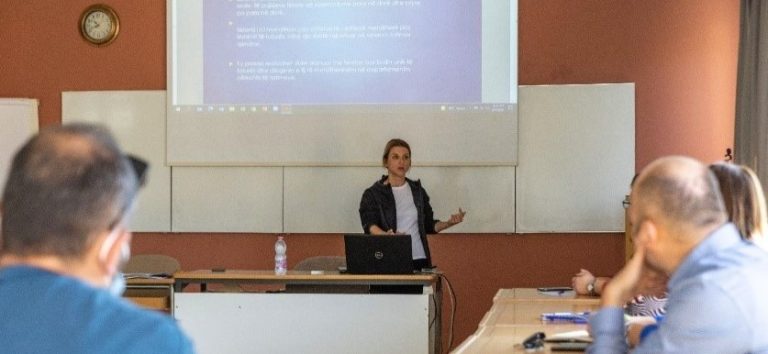
Photo: ARTIVISTA (Albania), Workshop in Prrenjas, Albania
In Albania, three CSOs in partnership with institutions are running e-Government Support Centers, and thus contributing towards the shaping and implementation of the Digital Agenda. In Prenjas and Pogradec, Artivista is running an e-Governmental Support Center in partnership with Nehemiah Gateway Albania, supporting the business and entrepreneurial community in obtaining e-services.
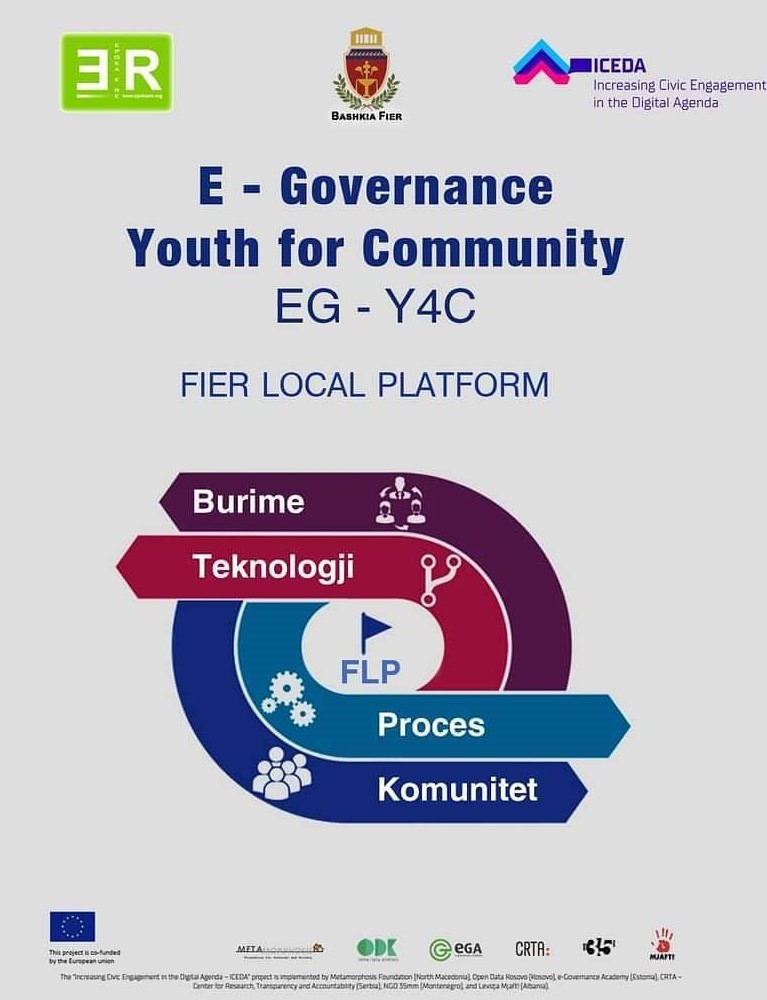

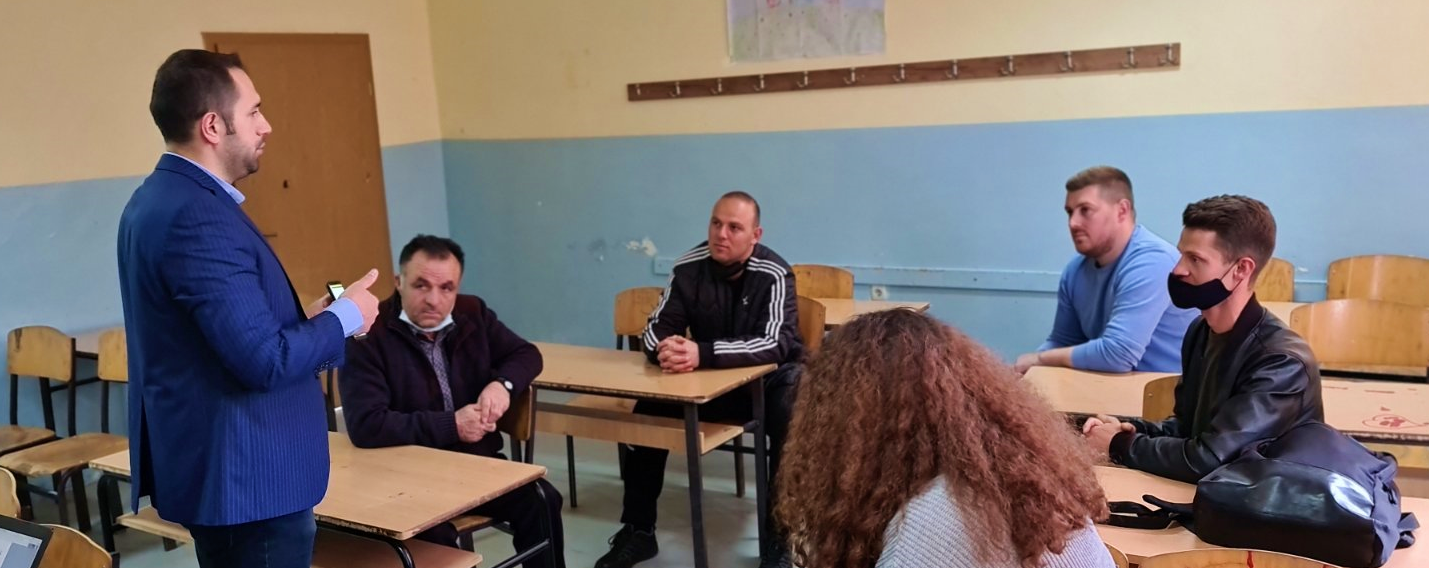
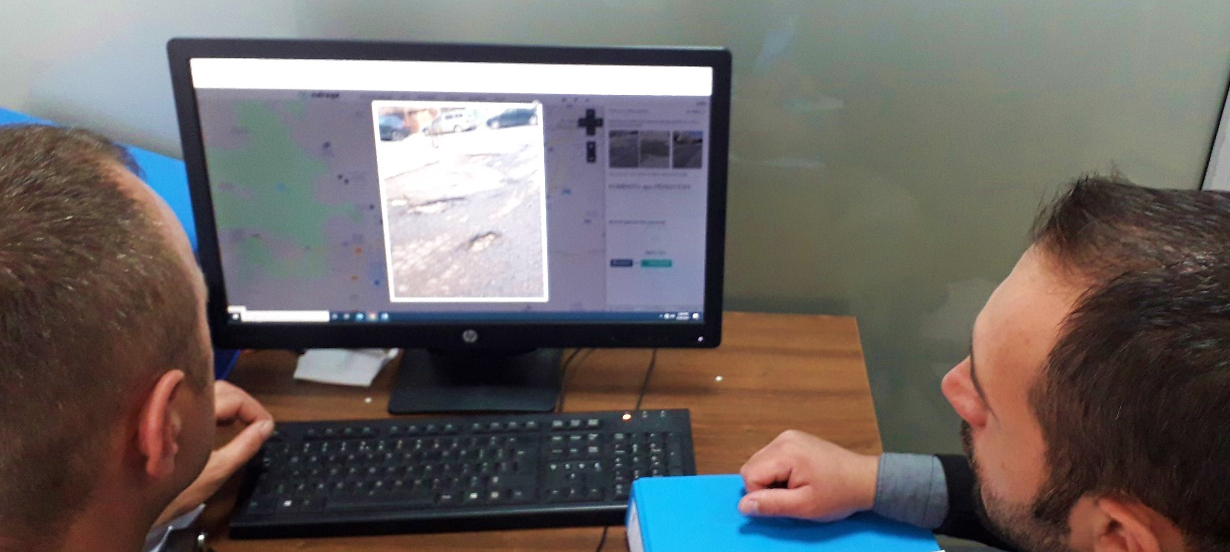
Photo: Promotional campaign of Epoka e Re
In parallel, Epoka e Re works in the 9 rural Administrative Units of Fier Municipality. In close cooperation with the municipality, they have created a platform for local e-services delivered by the Fier Municipality, through which they will facilitate and support citizens in obtaining the local public e-services of their importance.
In Elbasan and Durres, European Youth Association has partnered with Posta Shqiptare Sha (Albanian Post s.a) where they have mobile stands through which they provide the citizens with wide access to the e-services of the government.
Photo: Promotional campaign of European Youth Association
Kosovo
The three operating CSOs from Kosovo are fostering online civic participation. Democracy Plus aims to engage citizens to report complaints and increase responsiveness from institutions. They foster a culture of civic participation in Kosovo, through engaging citizens to report their complaints about public services on ndreqe.com for the Albanian speaking community and popravi.org for the Serbian speaking community.
Photos: Supporting citizens, Democracy Plus
Meanwhile, the Forum for Civic Initiatives cooperates with the Ministry of Internal Affairs and Public Administration to make it possible for all CSOs to register and use public online services designed for them, through a tailored-made Digital Academy for CSOs. The aim is to increase the capacity of CSOs and the media to address the challenges related to the Digital Agenda, empowering them to become active participants in this process and to raise issues related to the Digital Agenda within civil society and the media.
Photo: Forum for Civic Initiatives Twitter profile
Kosovo Youth Council aims to facilitate the access by providing online guidelines to e-services for citizens thus increasing the quality of receiving online e-governmental services. Their aim is to educate citizens and other stakeholders on how to better use these e-services by providing them with an adequate technical design platform that will allow them to understand the usage of all the e-services existent in Kosovo.
Montenegro
Three e-Governmental Centers are already established and running in Montenegro. The center that works in Podgorica is run by the Center for Youth Education, where they promote and support the currently available e-services of Podgorica municipality. Their focus is on the promotion of e-services offered by the Capital, but also on sharing information related to digitization and entrepreneurship.
The e-center Digital Classroom is functioning within the primary school ‘’Božidar Vuković Podgoričanin’’ for supporting teachers and students to use e-services related to education, the most. The center is run by Phiren Amenca whose main aim is to reduce the digital divide between Roma and non-Roma population.
The CSOs also have joint actions for supporting citizens in using e-services where Phiren Amenca participated, the most recent one being the support for students for the electronic enrollment in high schools.
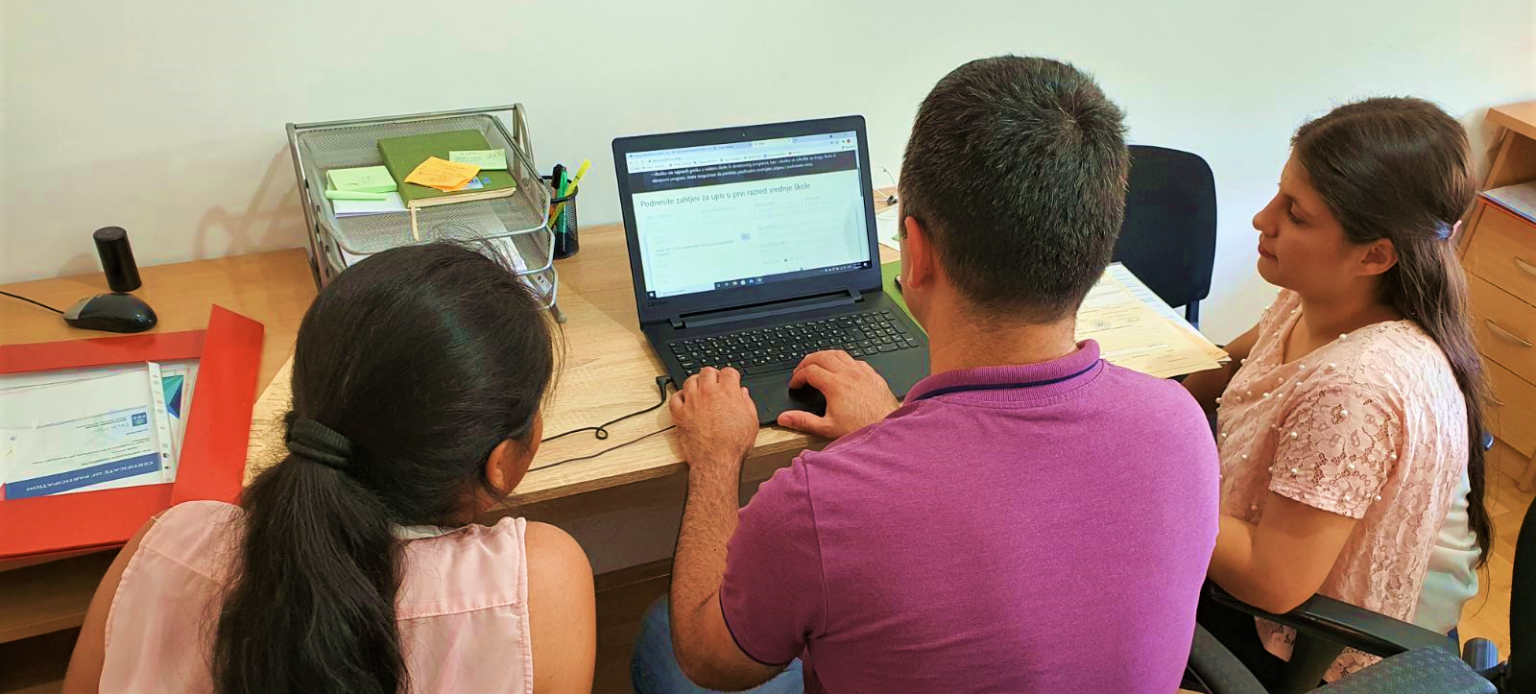
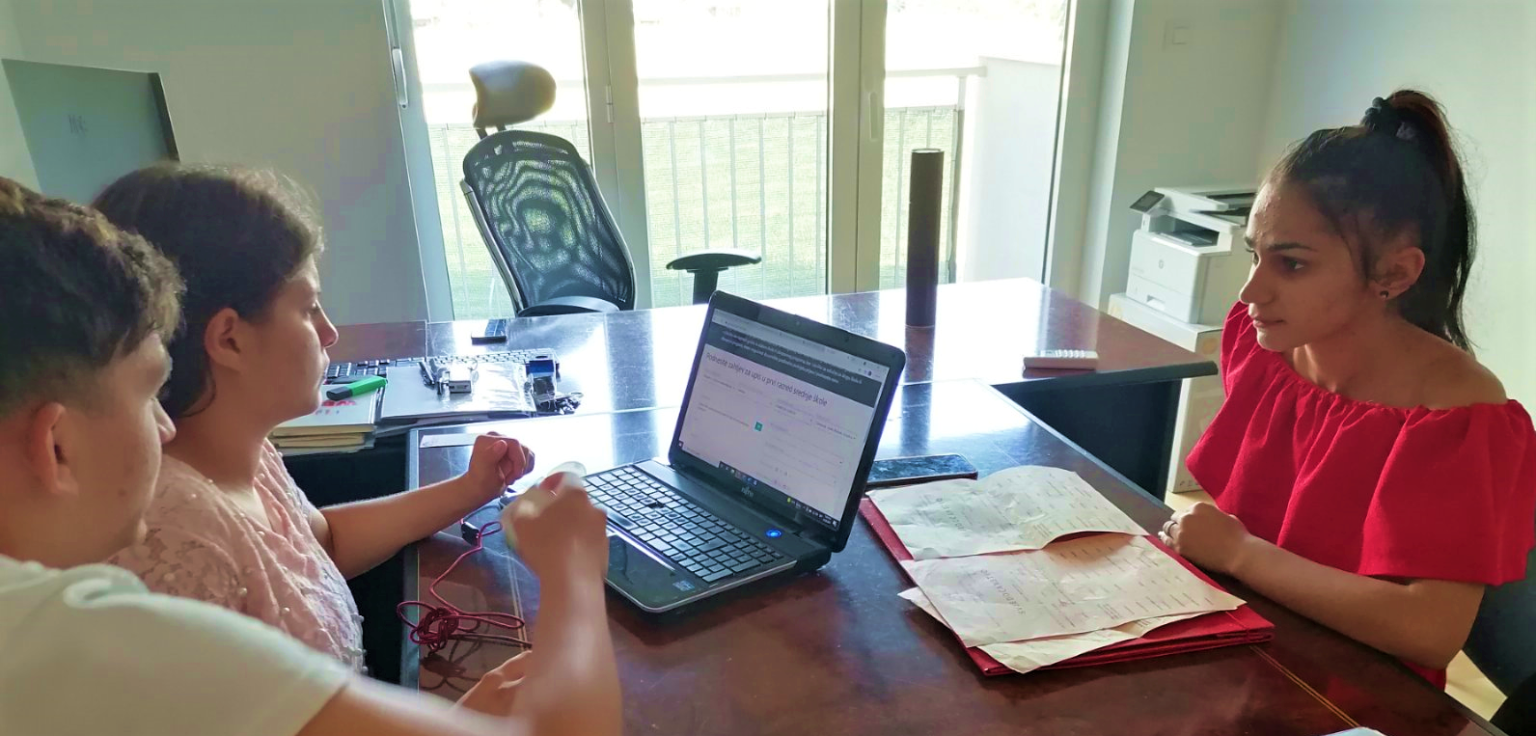
Photo: Phiren Amenca assisting the Roma community in electronic enrollment in high-schools, Facebook post
The third organization Super Hub operates in the Municipality of Pljevlja and through their center, they help citizens in using the existing e-services within the eGovernment portal.

North Macedonia
From the three organizations running e-centers in North Macedonia, one is situated in the City of Skopje. SmartUp – Social Innovation Lab within their Skopje Lab center developed a support program for citizens using the e-services that the City offers. The center functions within the premises of the City of Skopje and is open to the public every day where citizens can get support through direct meetings, through email, and by phone. SmartUp also provides support for citizens through their web portal https://aplikacii.skopjelab.mk through which the citizens can use some of the e-services the City has to offer and get information about the support available. The center is operated by two technical support agents and is currently offering support for online applications for subsidies (Inverter subsidies, bicycle subsidies, subsidies for e-scooters), as well as e-application for financial support for CSOs and individuals in several fields.
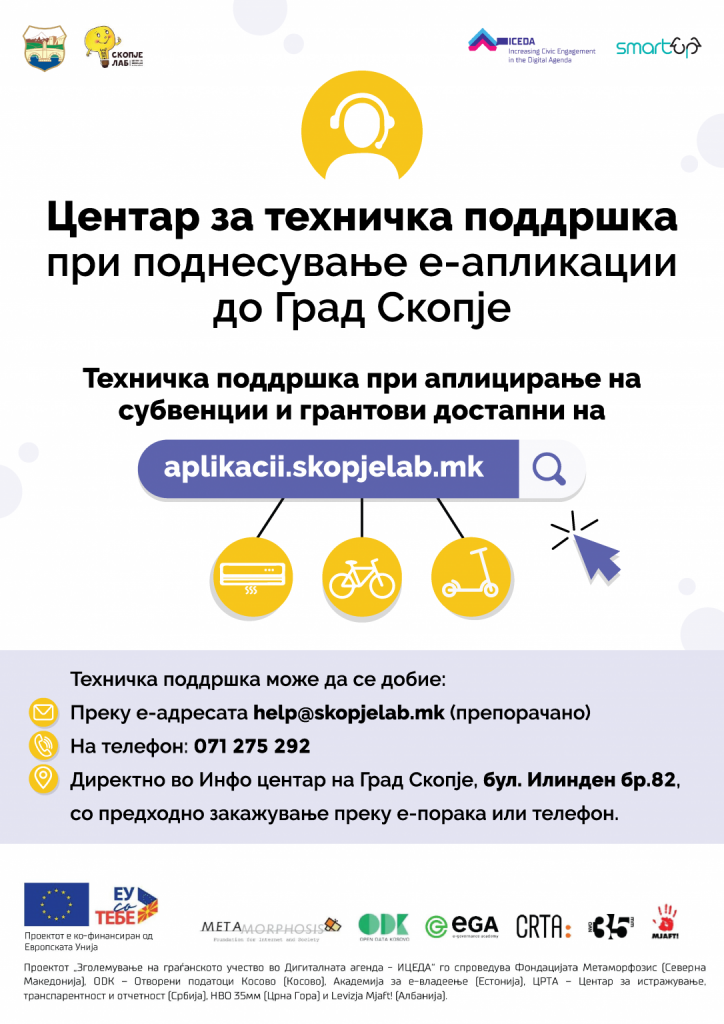
Photo: Skopje Lab support platform
The other two organizations are working more mobile and covering areas in several planning regions in the country. Association for Citizen’s Tolerance and Cooperation – ACTAC works in Dolneni and Prilep, mostly with marginalized communities among which the Roma community, citizens with low incomes, and illiterate citizens.
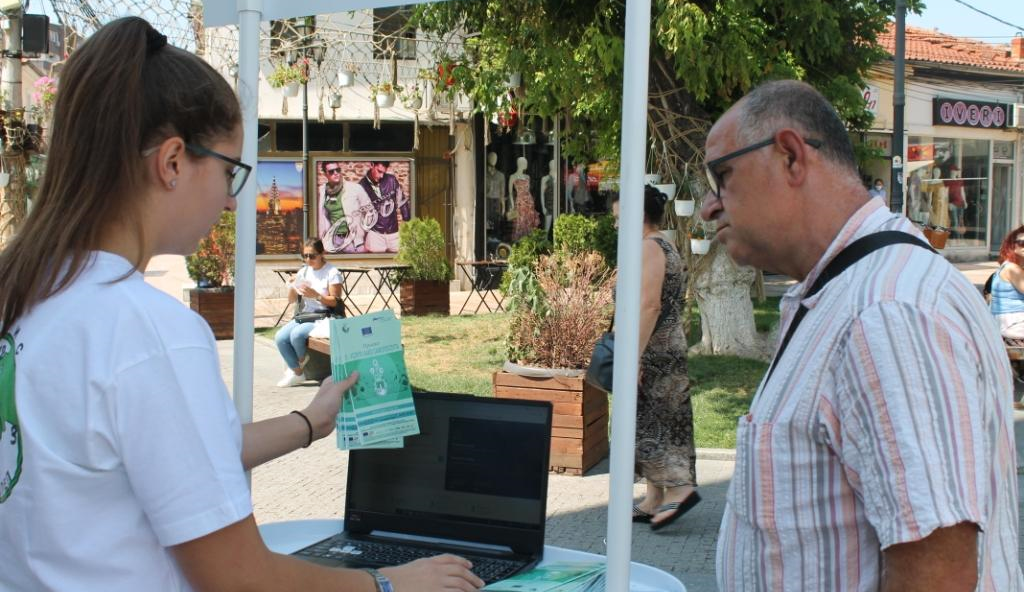
Photo: ACTAC’s volunteers supporting citizens in using e-services
“There are few e-services offered locally. According to the data that we have, the complete electronic services that are available are e-taxes, the gis-portal, introduction to the cadastral parcels of the DUP. The problem reporting system works, briefly and electronically. Otherwise, only 0.89 percent of the total clicks on the local government portal are for e-services. There is the title “e-services”, but you can only print a document.”, explains Blagica Cvetkoska, project coordinator at ACTAC for an interview in MKD. “Recently, an electronic service is required for enrollment of first graders. Due to the fact that lately there is a lot of talk about electronic services and the activities of the portal have immediately increased. It is easy to use. We encourage the citizens to use more e-services, and the institutions to make most of the services electronic, and to be electronic and simple. Only in this way will the citizens be encouraged to use them,” said Cvetkoska. ACTAC is also having a mobile caravan of activities where they support citizens to use different e-services in several places around the city and rural areas.''
Rural Coalition is working to increase trust in the public institutions by increasing the use and quality of e-services for the local community especially when agriculture is in question in Gostivar, Vrapchishte, Kichevo, Krivogashtani, and Dolneni. Through the E-Center, the organization will help farmers and locals use e-services and increase their digital literacy.

Photo: Opening of the e-Government support center in Kicevo, Rural Coalition
The results of the research conducted by the Rural Coalition during January and February this year of 246 respondents from the municipalities of Kicevo, Krivogashtani, Vrapchishte, Staro Nagoricane and Strumica show how much such support is needed at the local level. “Although 92% of the respondents have an electronic payment card, the majority of 60% use it only to withdraw money from an ATM. However, 93% of them are convinced that they would use it in providing electronic services if they have support in that process, “said Liljana Jonoski, Executive Director of the Rural Coalition in her presentation at the opening of the e-Center. Citizens are aware that new ways of providing services save them time, money, and protect their health. About 64% of the respondents still go to the counter or receive the required information for services over the phone, and less than one fifth (19.1%) managed to request and receive the service electronically. According to the Ministry of Agriculture, Forestry and Water Economy, only 5.8% of subsidy applications are submitted electronically. More than half of the respondents (54%) do not recognize the national portal www.uslugi.gov.mk where they can receive services electronically. According to Jonoski, the low percentage of use of this portal to a certain extent is due to the low trust in the issuance of electronic documents.
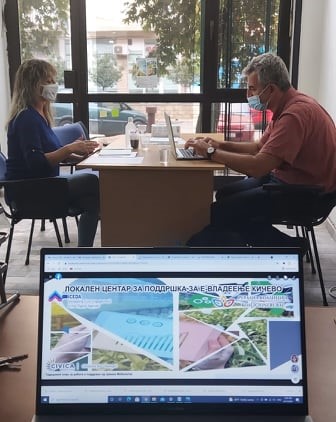
Photo: Rural Coalition supporting the elderly in obtaining e-services in Kicevo, North Macedonia
Serbia
Our sub-grantees in Serbia also established connections with state and local institutions. Center for Social Integration in partnership with the City of Vranje aims at educating the citizens, with the accent on vulnerable groups, in order for them to acquire basic digital skills and create an audio/video guide on a web platform with instructions on how to use the e-Government portal.
Deli works closely with the City of Nis – while SINHRO works in partnership with the City of Panchevo. They all aim to promote the Digital Agenda at the local level with a focus on local eGovernment usage by the citizens and its further development.

Photo: SINHRO premises in Panchevo, Serbia, training for educators
SINHRO’s center is within their hub where citizens can come and get information on the e-services they need support for the most, starting from electronic certificates, eCitizen, registration, payments, enrollment, permits, certificates, etc.
Video: SINHRO Facebook page
The good results achieved by the work of these 15 open e-centers have not been without obstacles or struggles, whether that be the political situation, the COVID-19 pandemic, or the lack of awareness and general mistrust in the institutions. However, they do testify that the close cooperation between the civic sector and state institutions is the key to getting closer to the citizens. In conditions of limited physical mobility and an uncertain social future, these organizations are helping state and local administrations to seize digital opportunities to carry out their responsibilities. The biggest challenges that our e-centers have faced in the past eight months have been winning the trust of the citizens and establishing a high level of data protection.
The Western Balkans can benefit tremendously from the development in Information and Communications Technology (ICT). ICT increasingly creates opportunities for governments to develop better policy-making strategies; formulate new leadership approaches, and improve the efficiency and effectiveness of service delivery. Now, the citizens can participate equally in the government’s decisions and policy-making processes. Even the remotest areas can be included, but special care and time should be devoted to increasing digital literacy as a tool for equity. To conclude, ICT fosters good governance, but support from all society stakeholders is necessary in order to include all citizen’s categories.
As these 15 centers work rapidly to bring the Digital Agenda closer to the citizens of the Western Balkans, we welcome the new grantees in the Grants Scheme Cycle LOT 2: Award grants for Digital Agenda Advocacy Initiatives.
