
 Obuke
Obuke
Januar
25, 2021.
The event Regional Dialogues for the Digital Agenda held on 22 January 2021
On 22 January 2021 (Friday) starting at 10:00 am, within the project “Increasing civic engagement in the digital agenda – ICEDA”, Metamorphosis Foundation in partnership with Levizja MJAFT (Albania), Open Data Kosovo (Kosovo), NGO 35 MM (Montenegro) and CRTA – Center for Research, Transparency, and Accountability (Serbia), held a regional online event “Regional Dialogues for the Digital Agenda”. The event was accompanied by live streaming on Facebook and the video can be found here.
The event was attended by 175 representatives of the civil society, institutions, media, and citizens of the Western Balkans, and it consisted of a short presentation of the regional survey Digital Agenda Observatory: Baseline research of the state of e-government development & digital literacy in the targeted Western Balkan countries 2020, followed by a discussion on improving the state of e-government development and digital literacy in the target countries of the Western Balkans.
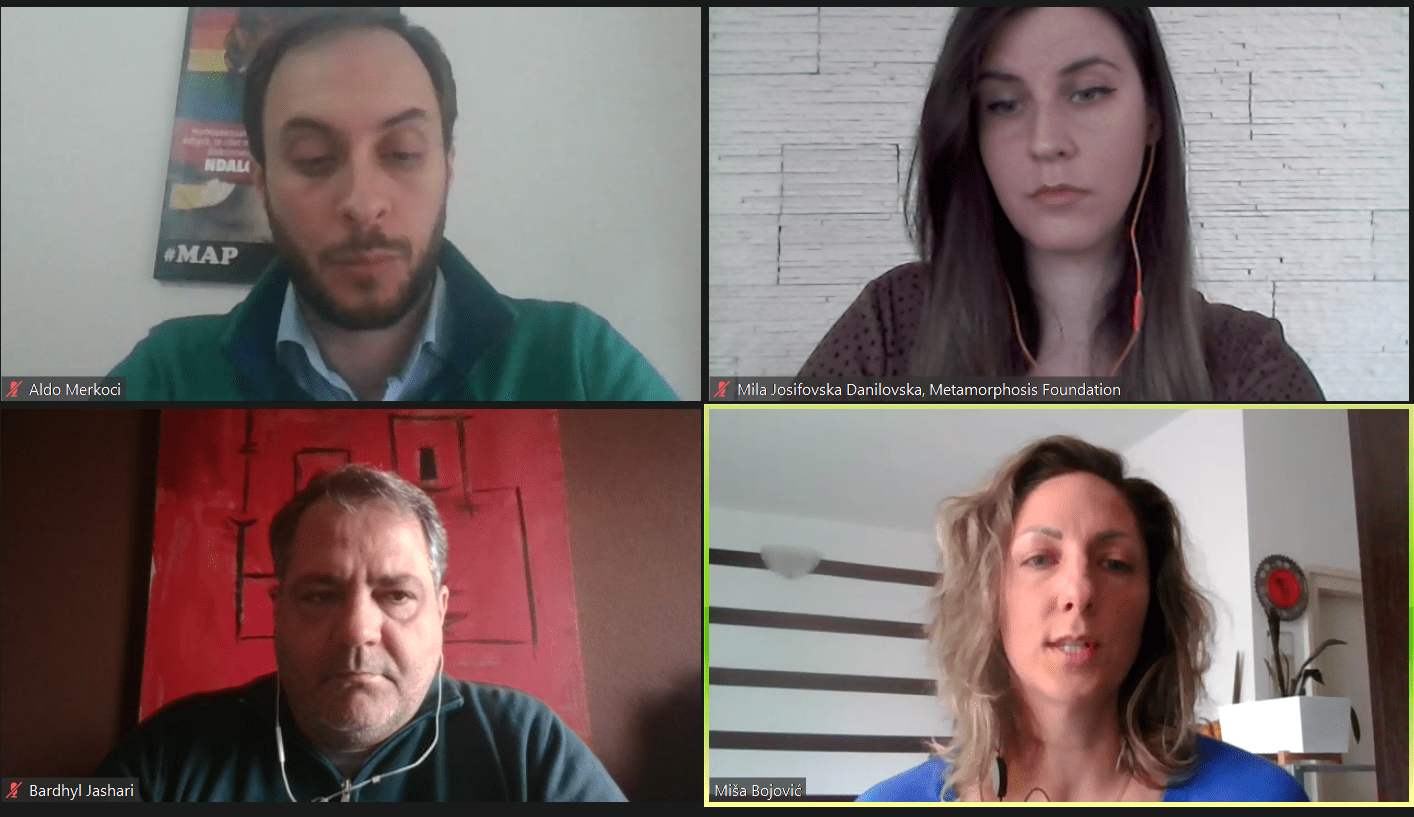
Bardhyl Jashari – Executive Director of the Metamorphosis Foundation, gave an introductory speech, emphasizing that digital transformation and the Internet contribute to economic development and innovation globally, regionally, and locally, but that in reality, and this is confirmed by IECDA research, that not all citizens from all walks of life are aware of or feel the benefits of digital transformation, which should ultimately provide an improvement in their lifestyle.
The introductory speech was followed by a short presentation of the regional survey “Digital Agenda Observatory: Baseline research of the state of e-government development & digital literacy in the targeted Western Balkan countries 2020” by Miša Bojović – – Senior Researcher at CRTA. The research is part of the Digital Agenda Observatory, which is a tool with a special methodology through which the implementation of the Digital Agenda in the Western Balkans in Albania, Kosovo, Serbia, North Macedonia, and Montenegro will be monitored during the project. The research aims to provide a regional perspective and a starting point for further measurement of progress in these areas about the Digital Agenda, as well as to provide additional recommendations for improvement.
“Digitalisation does not take up much of the administrative change. Governments need to set up portals that offer e-services in one place. The most efficient implementation of e-services is for the business sector, but even more, the effort is needed. Also, there is no end to some of them, because at one point the citizen is sent to the counter, i.e. in a traditional way of collecting data,” said Bojović.
In short, the key research findings are listed below:
- Efforts to provide broadband Internet to all citizens of the Western Balkans region are being recognized, but countries need to be more careful in updating their strategic and regulatory documents. Countries are late in harmonizing the legislation, and even more so in implementing innovation. Given the nature of the digitalization process, it should follow the demands of the market, otherwise it would remain outdated and too expensive.
- Furthermore, these efforts need to be complemented by an ambitious campaign to raise citizens’ awareness of the benefits of digitalization. With all countries currently experiencing political instability and facing elections this year, accompanied by a pandemic crisis, there are fears of slowing progress in the Digital Agenda commitment. If the new governments decide not to put this on their list of priorities, the termination of the process will significantly affect its results.
- The digitalization of services in the Western Balkans region is mostly financially driven, and most of the provided electronic services (e-services) are intended for the business sector. Governments should be encouraged to define their criteria for introducing e-government services based on the needs of citizens. In parallel, more efforts should be made in educating citizens whose digital literacy is currently low, to enable them to understand the benefits of digitalization.
- Digitalization is an integral part of public administration reform. It directly affects the efficiency of the administration and the budget savings. The biggest undertaking for all countries is the interoperability of all databases held by different government institutions. Once this process is completed, citizens will be able to receive any administrative service by simply starting an online procedure, while the rest of the process is automated. So far, governments have offered partial solutions, with more or less success, while some parts of the process rely on traditional public administration.
- The resistance to digitalization in part comes from the establishment of public servants. Reform means changing their long-term routine, need for education, change of procedures, adaptation to new technologies, etc. There is a generation gap in the process of getting used to e-technologies and what is inevitably normal and easy for the younger generations remains difficult for those who have become acquainted with technology in old age.
- Given that all Western Balkan countries are striving for membership in the European Union and still need to align with EU standards on democracy and the rule of law, the Digital Agenda remains one of the segments to be addressed.
Following the findings of the research, the roadmap was presented, i.e. a list of 18 recommendations for improvement in the priority areas that jointly provide a roadmap for advancing the Digital Agenda in the region that are available in the research.
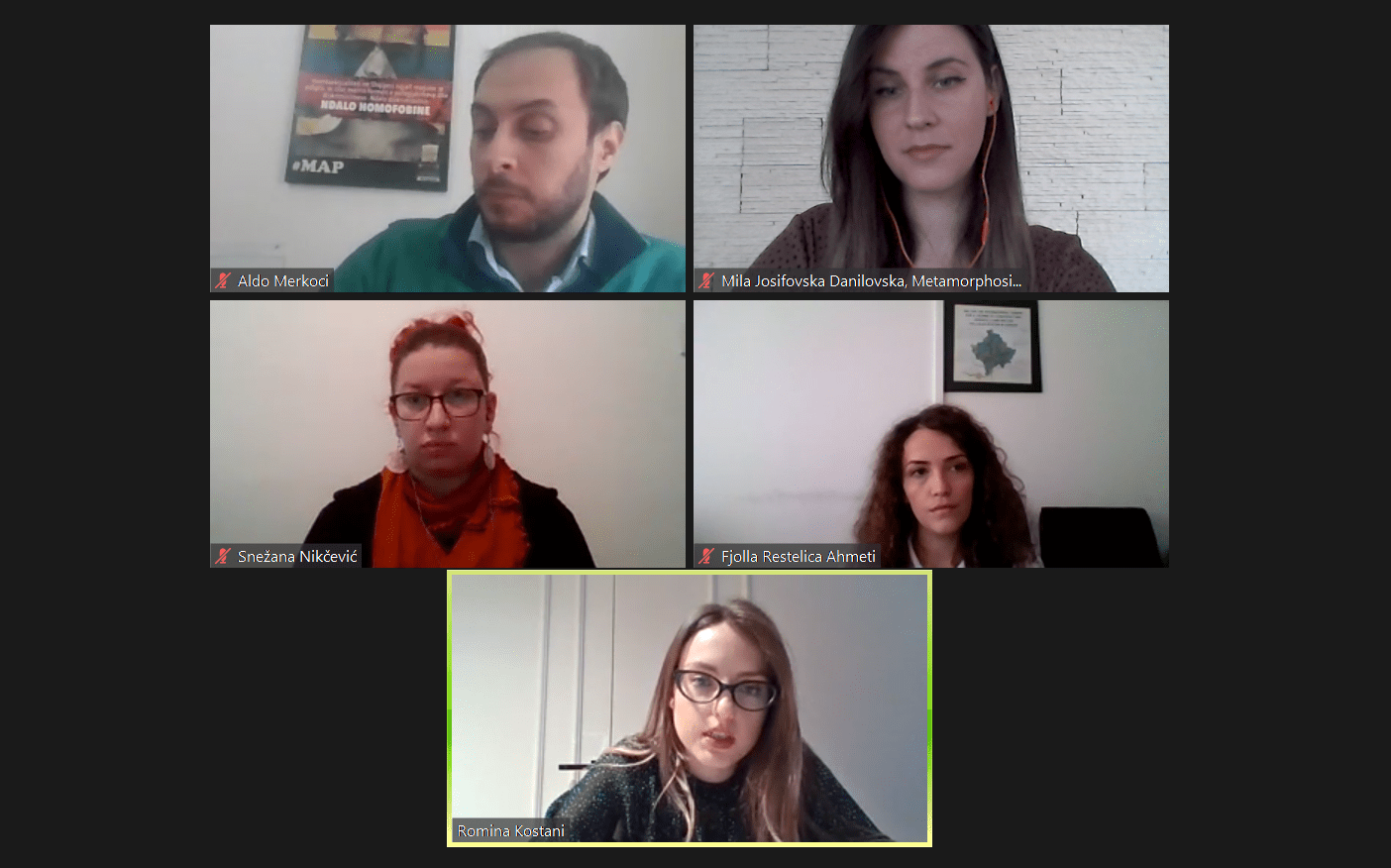
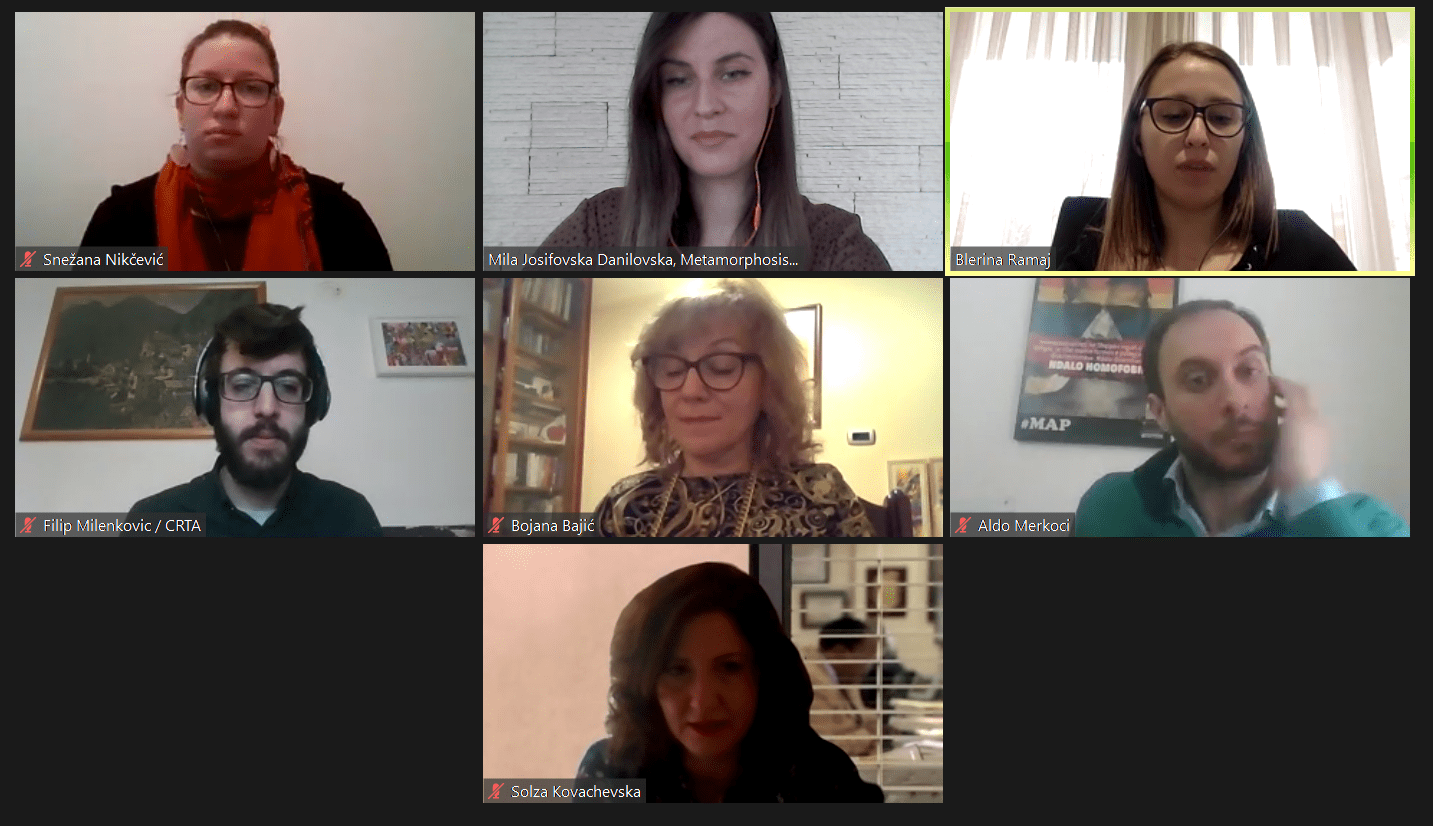
After the presentation of the research, a discussion started for improving the development of e-government and digital literacy in the target countries of the Western Balkans, which was attended by representatives of institutions and civil society organizations from the Western Balkans. Among the representatives of the institutions was Romina Kostani – Director of the Directorate of Innovation and IPA e-Government (Albania), Fjola Restelica – project KODE in the Ministry of Economy and Environment (Kosovo), Bojana Bajic – General Director of the Department of Digitalization and Information systems in the Ministry of Finance (Montenegro), Solza Kovacevska – State Adviser in the Ministry of Information Society and Administration (North Macedonia) and Žarko Dakic – IT Advisor, member of the Council of the City of Pancevo (Serbia). The civil society organizations that participated in the discussion are members of the ICEDA network, i.e. Aldo Merkoci – project coordinator in Levizja MJAFT (Albania), Blerina Ramaj – project coordinator in Open Data Kosovo (Kosovo), Snežana Nikicevic – project coordinator in NGO 35 MM (Montenegro) and Filip Milenkovic – project coordinator at CRTA (Serbia).
The conclusions of the discussion largely coincided with the conclusions and recommendations of the regional research. Namely, the purpose of digitalization is to simplify the processes and improve the life of the citizens, and the covid-19 pandemic further emphasized the importance and the need for digitalization of the institutional services, their simplification, as well as literacy of the citizens for online use of those services, instead of the traditional waiting at the counters. Of course, we must be aware that when introducing innovations and digital solutions, it is necessary to ensure their sustainability and security, as well as their solution through a systemic approach. Furthermore, it is necessary for the institutions from the region to put all e-services in one place and to make them completely digital, from the moment of application to the moment of receiving the service. Raising the collective awareness of the benefits of digitalization of the entire population was also one of the general conclusions, which presents a challenge for the coming period.
The research can be downloaded here.
The project is implemented by the Metamorphosis Foundation (North Macedonia), the Academy of e-Governance (Estonia), Levizja Mjaft! (Albania), CRTA – Center for Research, Transparency, and Accountability (Serbia), NGO 35mm (Montenegro) and ODK – Open Data Kosovo (Kosovo). The project is being implemented with financial support from the European Union and partially supported by the Ministry of public administration, digital society, and media in Montenegro.